GR8_TECH: gender imbalance will break when industry stops fixating on division
Considerable effort has been put in by several groups to close down gender imbalances, pay gaps and glass ceilings. Organisations such as SBC’s WE Initiative and Women in Gaming promote gender diversity in the industry to encourage companies to bring more women into leadership roles.
Despite these efforts, the iGaming gender imbalances have grown. According to the All-In Diversity Project’s 2024/2025 report, the industry gender split now stands at 65% male compared to 35% female. This has widened from 56% male to 44% female in the previous year’s report.
It is a striking trend, given that HR policies have pivoted to promote more diversity, equity and inclusion since the beginning of the decade. iGaming is a male-dominated industry, both on the B2C and B2B sides of the sector, with very few women holding CEO positions.
To investigate further, SBC News spoke to four women in senior leadership positions at platform provider GR8_TECH to understand some of the hurdles women have to jump through to climb the corporate ladder.
Is iGaming a divisive industry for gender relations?
The natural response upon reading statistics that reflect worsening gender balance might be one of anger or despondency. But there is a sense that judging people based on gender is an archaic methodology full stop.
Kate Pozdnysheva is currently Chief Client Officer at GR8_TECH, but her career background was rooted in product and technology roles, before rising through the ranks at the platform provider to reach the C-Suite.
Pozdnysheva argued that when building her teams, she does not focus on gender at all, preferring to take on a more meritocratic approach.
“There is work, there are tasks, and there is what inspires you or what you are simply capable of doing,” she noted. “Sometimes, in a large meeting full of men, I can quickly get everyone to focus and make a decision—but does that mean they couldn’t do it themselves? Of course not.
“I built a powerful team and structure that I can rely on 200%. That is my proudest achievement: the people, the team, and the foundation we created.”
It is a sentiment that is shared amongst the GR8_TECH team. People should not be judged on their gender, but rather by their skills and how they can contribute to the wider team and company.
Sondra Bagata, the company’s Senior Project Manager, frames it as a knowledge question rather than a gender one and she’s candid about why some diversity efforts misfire.
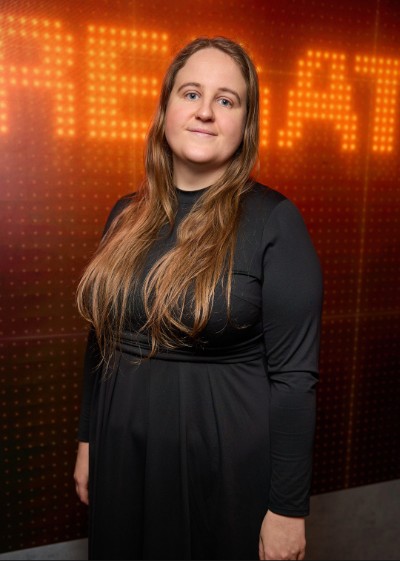
“Companies may feel pressure to have a certain percentage of women in management, but often women are placed in less decision-making roles, while the decision-makers are still men,” she said.
Her preferred fix is to take gender out of the equation entirely: “When gender is removed from the information, people tend to choose women and men more equally.”
The pushback is understandable given the talent, intellect and effort that contributes to reaching senior leadership roles. Pozdnysheva is a go-to contact for GR8_TECH’s global portfolio of clients, has a deeply technical background and leads a team.
Bagata has two master’s degrees, is doing a PhD and has worked for over 50 firms. It is impossible to reach these roles purely from positive discrimination. There is hard work and talent behind these stories.
How to navigate a male-dominated industry
Though attitudes are changing, the truth is that men are far more likely to reach leadership roles in iGaming. While a meritocratic approach is best-practice, another harsh truth is that those approaches are not always adopted.
Olena Ostapenko, GR8_TECH’s Head of Platform, recalled times earlier in her career when she attempted to fit into the male-centric environment.
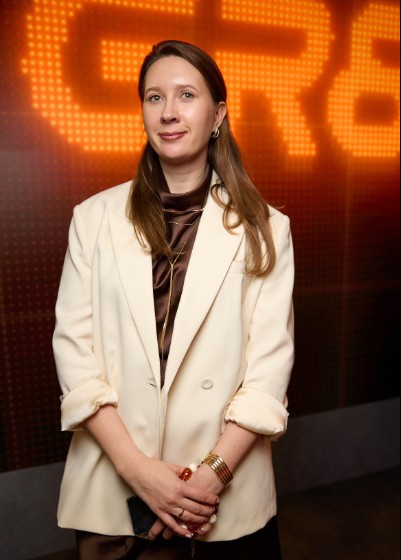
“I tried to copy the assertive, competitive behaviour I saw around me,” she said. “But I quickly realised it didn’t feel natural to me, and that I had my own strengths like building relationships, creating trust, finding mentors and working through partnership rather than aggression.
“That approach helped me grow from a QA engineer to a head of department, and now I lead more than 250 engineers. Today, I can use both strategies: I can speak from a position of authority when needed, but I also know how to negotiate, listen, and use soft power to reach the right outcome.”
Ostapenko also noted that the culture within the industry has dramatically improved in the last 15 years.
“Men have become less eager to divide people by gender, and women have become more confident and resilient. We understand our own values better now, and the unique qualities we can bring to a team, community, or society,” she added.
Bagata believes she was one of the first women in Latvia to hold a senior tech leadership role, but before that she spent around eighteen months being rejected, sometimes at final-stage interviews, because she was a woman.
“The biggest issue was being rejected because of my gender, especially when I was already very overqualified,” she said.
Her conclusion isn’t that gender stopped mattering, but that a strong track-record eventually overrode it.
“Once you prove yourself, the team starts to trust you, and gender becomes less of an issue.”
How to smash the glass ceiling
While there is a widening of the gap between male and female participation in iGaming over the last few years, it is clear that there is also a glass ceiling that is prohibiting women from getting into senior management positions.
According to the World Economic Forum Global Gender Gap Report 2025, only 22% of company executives are women, while only 27% of senior managers are female. Just 7% of companies have a female CEO and 9% have a female body chair.
In technology sectors, women hold just 19% of leadership roles.
Pozdnysheva put the starting point bluntly: “Companies need to honestly admit whether they have internal gender biases. If they do, they need to fix themselves first. True progress starts with internal honesty.”
A workplace where gender doesn’t register is the destination, but the numbers prove the industry isn’t there yet. Treating the sector as already gender-blind when the data says otherwise doesn’t create change.
The companies closing the gap are those willing to look at their own numbers first, and then act.
Olga Dobzhynska, Employer Brand Team Lead at GR8_TECH, explained that there are two places women can get lost, the route into leadership, and the visibility that gets you noticed for it. She noted that both factors can be built deliberately rather than left to chance.
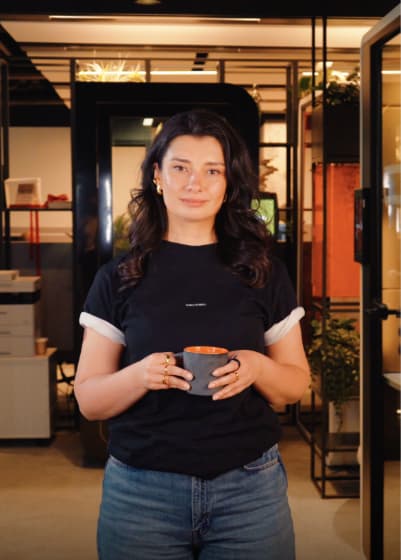
“We focus on building skills and visibility,” Dobzhynska said. “GR8 Managers is our managerial development program covering every level, from first-time managers through to executives, so the path into leadership is structured rather than left to chance. GR8 Speakers program trains people in public speaking and presentation skills, and our employer brand team is constantly sourcing speaking opportunities.
“Stage time matters because visibility is often where women in tech get overlooked. We also support the Women in Tech Summit and send our own mentors to the event.
“What ties these together is that they’re open to everyone but disproportionately useful for women, who industry-wide get less access to sponsorship and fewer chances to be seen.”
GR8_TECH also has other practical actions to help women in the workplace such as running salary reviews twice a year to ensure people are compensated at market rate and to avoid gender gaps.
As well as maternity leave, the company also offers a monthly childcare budget, something that Dobzhynska says is crucial “because the career break is one of the biggest leak points in the leadership pipeline.”
The bottom line
Progress is uneven, but the direction of travel is clear and the women leading at GR8_TECH are proof of what it looks like when it works.
Ostapenko sees the change accelerating with each cohort.
“There is still space to improve, but I believe it’s a matter of time,” she noted. “The newer generation already notices these differences less. I would like to see more women in managerial positions, because the way we listen, observe, gather opinions, and pause before reacting can bring a lot of value.”
Pozdnysheva puts her energy into the relationships that pull other women up. “As a leader who has managed various types of team structures, I am always ready to mentor and support other women, helping them grow in the broadest sense of the word.”
For Bagata, the goal isn’t women over men or men over women. Instead, it’s balance, because for her the strongest teams draw on the widest range of skills, traits and viewpoints.
“When I build teams, I usually join companies where the team is 100% male. By the time I leave, it’s often closer to 50/50,” she said. “It’s not really related to gender. I look for the best candidate.”
Ultimately, the outtake is simple. If you get the conditions right on hiring, development, visibility and balance, then representation stops being a target you chase and becomes the natural result of doing the work well.
No Comments